What "Montessori-aligned" actually means
Montessori is a method, not a product category, and the word is not protected for toys. A material earns the label by doing a specific job: it isolates one difficulty, it has a control of error that lets the child see the mistake without an adult, it is made of real materials, and it sits in a sequence that runs from concrete to abstract.
That is a high bar. A knobbed cylinder block with ten cylinders of decreasing diameter teaches size discrimination and nothing else; the child feels the misfit and corrects it. A wooden shape sorter with nine shapes and four colours teaches several things at once, which is fine as a toy but not as a Montessori material. Both belong in a shop. They do not belong under the same sign.
The catalogue items that fit the first description are the sensorial and practical-life pieces: knobbed cylinders, colour tablets, number rods, spindle boxes, dressing frames, pouring and transferring sets. The rest of the range is open-ended or early-learning, which is a different sale.
Where open-ended toys do a different job
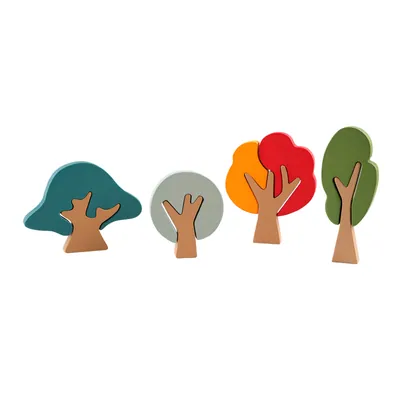
Open-ended toys have no correct outcome. Blocks become a road, a castle, a shop; a ramp becomes a physics experiment; a play kitchen becomes a restaurant. The value is in what the child brings, not in what the material dictates.
That makes open-ended product easier to sell and harder to defend. It has no curriculum, no training, no sequence, and it competes on price with every other wooden block set on the market. Its advantages are real: longer play life, fewer rules for the adult, and a lower price per hour of play. It also survives being shared by four children at once, which matters in a preschool.
Parents buy outcomes; preschools buy logistics
Parents search for "Montessori toys" and read about screen-free play. They buy in sets, they respond to age bands, and they will pay USD 25–60 for something that looks like a material rather than a toy. A parent does not check whether the finish is food-safe; they check whether it looks good on a shelf and whether the child will use it for more than a week.
Preschool buyers are the opposite. They order six to ten of one item for a classroom, need replacement parts, want a teacher guide, and care that the piece fits a 30 cm shelf and survives being dropped by a three-year-old. They pay on invoice, they need safety documentation on file, and they reorder the same SKU for years if it holds up. A preschool will not buy a set of twelve; it will buy twelve of one.
Both groups ask about certification, but for different reasons: the parent wants reassurance, the preschool needs it for its insurer and its licensing.
Building a balanced shelf
A retail wall that is all Montessori looks like a classroom and sells to a narrow slice of parents. A wall that is all open-ended has no story and competes on price. The workable split is around 40% Montessori-aligned, 40% open-ended and 20% hybrid: toddler pieces, first puzzles, and simple cause-and-effect toys that bridge the two.
Merchandise by age, not by pedagogy. A parent shopping for a two-year-old does not want to read a philosophy; they want to know what is safe and what the child will do with it. Put the Montessori story on the shelf edge and in the staff script, and let the product do the work. Keep the bottom 90 cm for the pieces children can reach, and expect the top shelf to be storage.
A 3-metre wall: suggested SKU mix
Assume a 3 m wall, 1.8 m high, five shelves at 30 cm spacing, product depth 30 cm. That gives about 13.5 running metres of shelf and room for roughly 80–90 SKUs at a realistic density for boxed wooden toys.
| Block | Share of shelf | SKUs | Retail band (USD, indicative) | Role |
|---|---|---|---|---|
| Practical life | 15% | 12 | 15–40 | Entry price, gift, high turnover |
| Sensorial materials | 15% | 10 | 25–90 | Credibility, preschool orders |
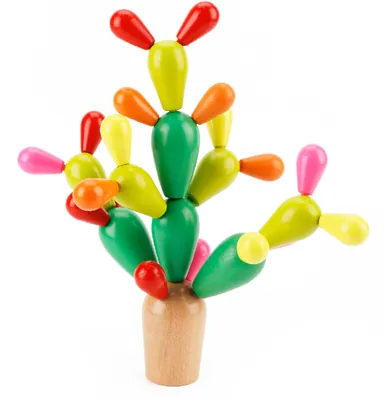
| Puzzles and tangrams | 12% | 14 | 8–25 | Impulse and birthday |
| Math and teaching aids | 10% | 10 | 20–70 | Preschool and homeschool |
| Building blocks | 20% | 16 | 20–80 | Anchor open-ended range |
| Pretend play | 13% | 10 | 30–120 | Higher ticket, Q4 gift |
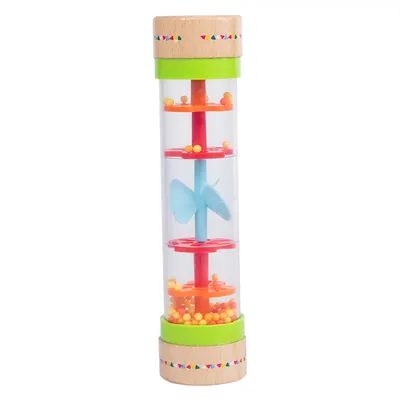
| Baby and toddler 0–3 | 10% | 8 | 12–45 | New-parent traffic |
| Rotation slots | 5% | 4 | — | Test pieces, 8–12 week cycle |
Eighty-four SKUs, four of them rotating. The rotation slots matter more than the maths suggests: they let you test a new range without committing shelf space for a year, and they give returning customers a reason to look again.
Certification and age grading apply to both
Montessori materials are not exempt from toy safety law. A number rod set, a bead counting box and a spindle box all contain small parts, which puts them at 3+ with a choking-hazard warning. A teether or a first blocks set aimed at under-threes needs the same EN71-1, EN71-2 and EN71-3 work as anything else, plus CPSIA and ASTM F963 for the US.
Age grading is a product decision as much as a legal one. A Montessori-aligned material that is genuinely safe for a two-year-old, tested and labelled as such, is worth more on the shelf than the same item labelled 3+ because nobody checked. Get the grade right and the certification follows; get it wrong and the returns cost more than the margin.
Next step
Tell us the wall size, the split you want and the price bands you need to hit. We will propose a SKU mix from Montessori toys and the open-ended ranges, with age grades and test status for each. Or start with request a quote and we will build the shelf plan around your order.